


BMW's new 3 Series goes electric
BMW premiered the new 3 Series on 30 September, and for the first time the line-up includes a fully electric model, the i3, built on the Neue Klasse platform.
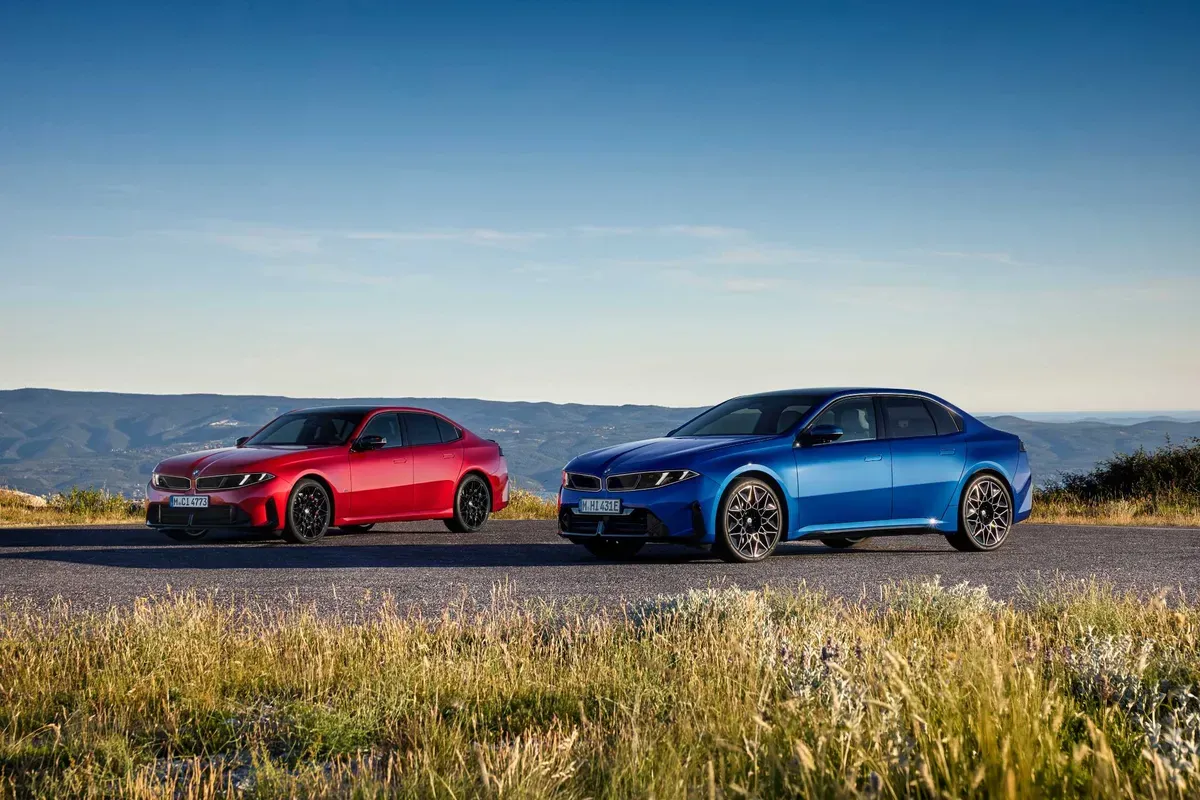
The i3 50 xDrive has 345 kW (469 hp) and 645 Nm, reaches 100 km/h in 4.7 seconds and carries a 108.7 kWh battery rated for up to 912 km on the WLTP cycle. It charges at up to 400 kW, adding as much as 423 km in ten minutes. The i3 40 xDrive offers 275 kW (374 hp), an 82.8 kWh battery and up to 710 km.
The 3 Series keeps its combustion engines alongside. The petrol range is mild-hybrid and is topped by the M350 xDrive, whose 3.0-litre six-cylinder makes 326 kW (443 hp). BMW says a plug-in hybrid will follow over the coming year and an i3 M60 xDrive in 2027. It has not yet announced prices.
Volkswagen Group: a hot ID.3, a frugal Audi and a record-breaker
Audi revealed the A2 e-tron on 7 September and opened orders in Germany three days later. Built in Ingolstadt, it is Audi's most efficient model so far, using 12.8 kWh per 100 km and covering up to 646 km. There are four power outputs and three battery sizes. German prices start at €38,200 for the 125 kW version with a 52 kWh battery and rise to €51,200 for the 240 kW version. Deliveries begin in December.
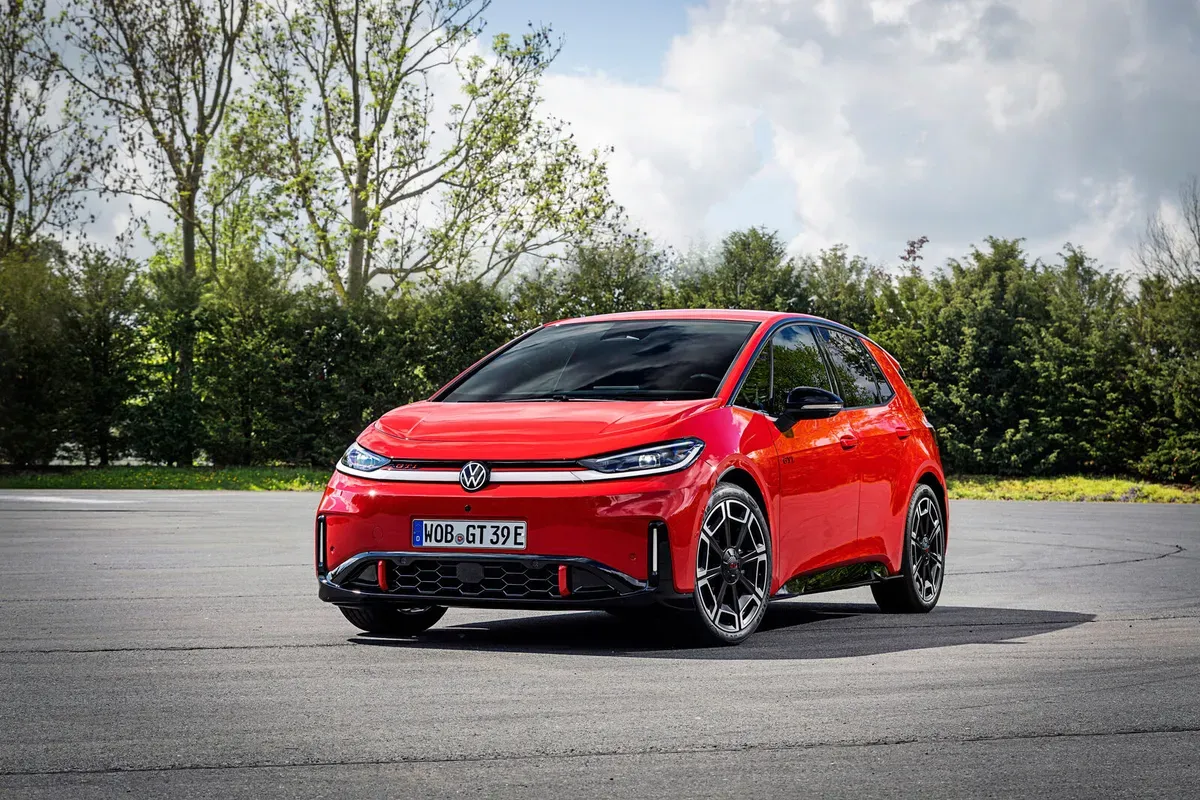
On 16 September Volkswagen gave the electric ID.3 GTI its world premiere. With 240 kW (326 PS) and 545 Nm sent to the rear wheels, it is the most powerful GTI yet: 0–100 km/h takes 5.6 seconds and top speed is 200 km/h. A 79 kWh battery gives a forecast range of up to 601 km, and a 10–80% charge takes about 29 minutes at up to 183 kW. Pre-sales start at the beginning of 2027.
Two days earlier, Volkswagen showed Mission Efficiency, a near-production study that is not for sale. Its drag coefficient of 0.158 is a record for a road-legal car. It drove 1,278.36 km from Wolfsburg to Vienna with a single charging stop, averaging 7.51 kWh per 100 km including charging losses, using a 54.9 kWh battery and the same 99 kW motor as the ID. Polo.
Small electric cars come home to Europe
Dacia presented the second-generation Spring on 8 September. It now sits on Renault's small RG-EV platform and is built in Europe, at Novo Mesto in Slovenia.
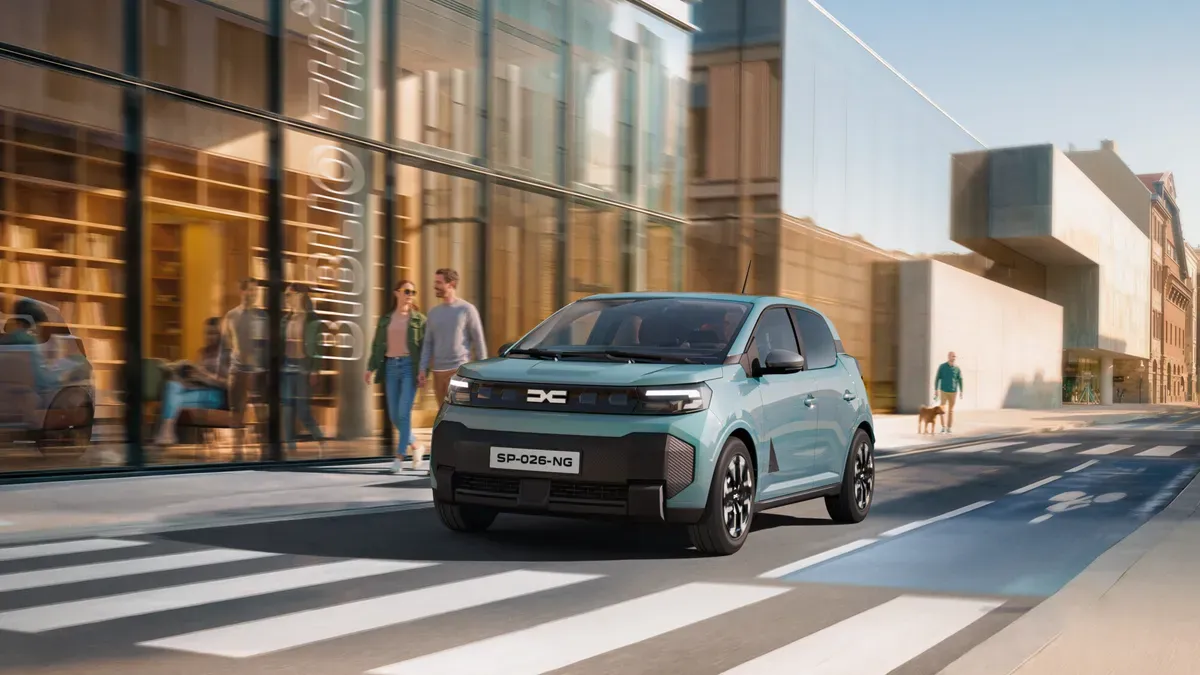
The Spring has 60 kW (80 hp), a 27.5 kWh LFP battery and up to 250 km of WLTP range. It charges at 6.6 kW as standard; an optional pack adds 11 kW AC and 50 kW DC charging, taking it from 15 to 80% in 28 minutes. Dacia has not yet published prices.
Its sister car arrived on 23 September: the Nissan PIXO, which brings Nissan back to Europe's smallest car segment. Developed with Renault and also built at Novo Mesto, it uses a 27.5 kWh LFP battery and a 60 kW motor for up to 259 km. Unlike the Dacia, it has 11 kW AC and 50 kW DC charging as standard. Nissan will announce prices and open pre-orders from December, with deliveries from early 2027.
Longer-range plug-in hybrids and new safety ratings
Volvo launched long-range plug-in hybrid versions of the XC60 and XC90 on 15 September, its first for Europe. The XC60, which also gets a design update, covers up to 200 km on electricity and the XC90 up to 160 km. Order books opened the same day in selected markets, and production starts later this autumn.
On 2 September Euro NCAP published its latest results. The AION UT, Geely E2 and Leapmotor B05 each earned five stars. The Cupra Raval scored four stars as standard and five with its optional Safety Pack, as did the Kia K4, while the Mercedes-Benz CLE Cabriolet earned five stars. Leapmotor noted full marks for the B05 in the side barrier and side pole tests.
Concepts and limited editions ahead of Paris
Many brands are saving their big reveals for the Paris Motor Show (12–18 October), but a few showed their hand early.
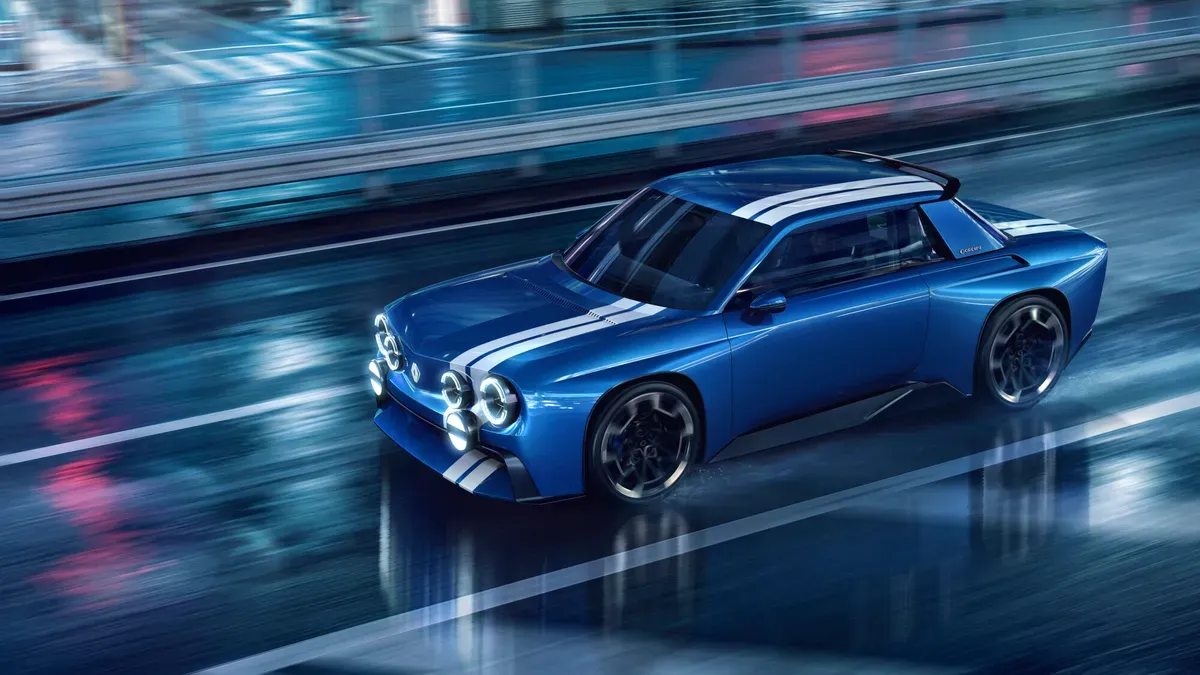
On 24 September Renault unveiled the Renault 8 Gordini Concept, a two-seat electric coupé that revives the R8 Gordini name, with a 270 hp motor driving the rear wheels. It is a one-off and will appear on Renault's stand in Paris.
Alfa Romeo unveiled the 33 Stradale "Perla Nera" at its museum in Arese on 28 September: one of the 33 cars built, with fully exposed matte carbon bodywork and a twin-turbo 3.0-litre V6 of more than 630 hp. It is on display there until 18 October.
Porsche announced the 911 GT3 Bergsport, a market edition limited to 100 cars for customers in Austria, France, Italy and Switzerland, with the Lightweight Package and a six-speed manual gearbox.
Volkswagen's reset, a large recall and paused plants
On 3 September Volkswagen's supervisory board approved the "Future Plan 2030". It plans around 50,000 further job cuts across the group and acknowledges that its European capacity exceeds demand by more than 500,000 vehicles. The board said a competitive production allocation for Emden, Zwickau, Hanover and Neckarsulm cannot currently be secured from 2031 to 2034, and alternative uses for those plants are being assessed. The model portfolio is to shrink by about half by 2035.
In Spain, SEAT said on 10 September that "several scenarios remain possible beyond 2030" for the brand and that no decision has been taken. The mild-hybrid Ibiza and Arona planned for 2027 go ahead, Cupra remains the company's main growth driver, and the Spanish government pledged to do what it can to keep the brand.
Germany's motor transport authority, the KBA, listed a recall of about 2.86 million cars worldwide on 25 September, because corrosion can break a bolt that secures the steering gear. It covers around 2.16 million Volkswagens (Golf, Golf Variant, Tiguan, Touran and Caddy built between September 2013 and July 2024) and more than 696,000 Audi Q3s built between October 2017 and May 2024. The repair is free and takes up to an hour.
On 29 September Stellantis said it would pause four French plants in October: Sochaux from 23 to 30 October, citing insufficient availability of certain batteries for long-range electric cars, as well as Rennes, Mulhouse and Poissy.
Elsewhere, Volvo Cars named Klaus Zellmer, currently head of Škoda, as its next chief executive, taking over by 1 October 2027 at the latest. And CATL began trial cell production in Debrecen, Hungary, on 22 September; at full build-out the plant is planned at 100 GWh, CATL's largest outside China.
Chinese hybrids, Spain's Auto+ and Portugal's fuel tax
The EU asked China to cap its hybrid exports voluntarily at around 15% of EU hybrid sales, according to a report on 17 September. It is a request, not a decision. Chinese hybrids pay only the standard 10% car tariff, and Eurostat figures show 160,662 Chinese-made full hybrids sold in the EU from January to July, against 659 in the whole of 2022.
In Spain, the second line of the Auto+ programme, for the self-employed and companies buying electrified vehicles, was published on 24 September. It has €50 million (€42 million for companies, €8 million for the self-employed), and applications run from 1 October to 31 December.
In Portugal, the government raised the fuel-tax discount on 4 September to a total of 23 cents a litre on petrol and diesel as prices passed €2 a litre. On 25 September it trimmed the discount again, to €100.29 per 1,000 litres of diesel and €73.43 per 1,000 litres of petrol, after diesel reached a record average of €2.210 a litre.
Registrations: electric cars keep climbing
The latest Europe-wide figures, published by ACEA on 24 September, cover August. From January to August, 7,546,397 new cars were registered in the EU, up 5.3%. Battery-electric cars took 21.7% of the market, against 15.8% a year earlier, and hybrids 36.6%. Plug-in hybrids reached 10%, while petrol and diesel together fell to 29% from 37.5%. In August alone registrations rose 4.5% to 708,211, and battery-electric registrations rose 62.7% to 196,486.
National figures for September, published on 1 October, show the same direction in our three markets:
- Portugal: 19,589 passenger cars, up 15.2%, of which 47.7% were battery-electric.
- Spain: 93,858 passenger cars, up 10.2%. Battery-electric and plug-in hybrid cars together reached a record 34% share, with battery-electric sales up 71.7% to 17,366.
- France: 156,629 passenger cars, up 11.6%, with electric cars taking 42% of the market, against 22% in September 2025.