

Stellantis brings affordable electric cars to Paris
The Paris Motor Show ran from 12 to 18 October, and Stellantis used the evening before it opened to show six concept cars. Two of them point at cheaper electric cars.
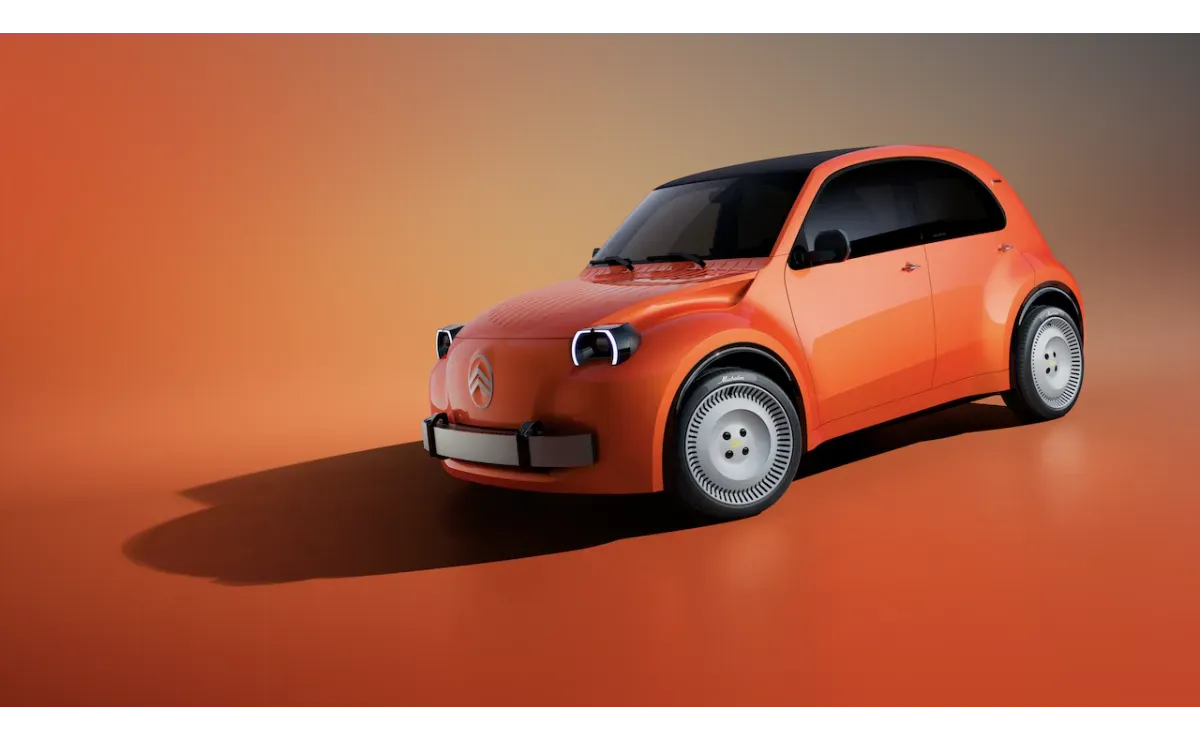
The Citroën 2 CV Concept is fully electric and 3.76 metres long, which makes it shorter than the original 2 CV. Citroën is aiming for a weight of around one tonne, so that a smaller and cheaper battery will do. The production car will be built in Europe, with a target starting price of around €15,000, and will follow the EU's planned rules for small electric "E-Cars". It will sit between the Ami and the C3. Citroën says it will unveil the model within the next two years and that it will join the range by 2028.
The Peugeot RCZ Vision is a four-seat electric coupé with 500 hp and up to 600 km of range. Its solid-state battery, developed with Factorial Energy, is only 110 mm thick and runs on a 1,000-volt system, so a charge from 10% to 80% takes about ten minutes. Peugeot says its Hypersquare steering control is the production version that will appear in the next-generation E-208.
Opel showed the STX Concept, an estate study for the future design of its Sports Tourer models. Alongside it stood the new Corsa GSE: with 207 kW (281 hp), 345 Nm and 0–100 km/h in 5.5 seconds, it is the most powerful Corsa so far and quicker than any other Opel currently in production.
Lancia's new Gamma, built in Melfi
Lancia gave the new Gamma its world premiere in Paris, fifty years after the original. It is a fastback crossover 4.67 metres long, designed, developed and built in Italy at the Melfi plant, which received a €43 million upgrade.
The range starts with a 145 hp hybrid that covers more than 1,000 km on a tank. The electric versions have 230 hp and more than 540 km of range, or 245 hp and more than 740 km. At the top, the Gamma HF Integrale has two motors, all-wheel drive and 375 hp, reaches 100 km/h in 5.1 seconds and covers up to 676 km. Charging from 20% to 80% takes 27 minutes. The drag coefficient is 0.25, and the boot holds 560 litres.
Volkswagen opens pre-sales for the ID. Tiguan
On 9 October Volkswagen gave the ID. Tiguan its world premiere. The electric SUV replaces both the ID.4 and the ID.5, of which more than 950,000 have been built, and goes on sale alongside the petrol, diesel and hybrid Tiguan.
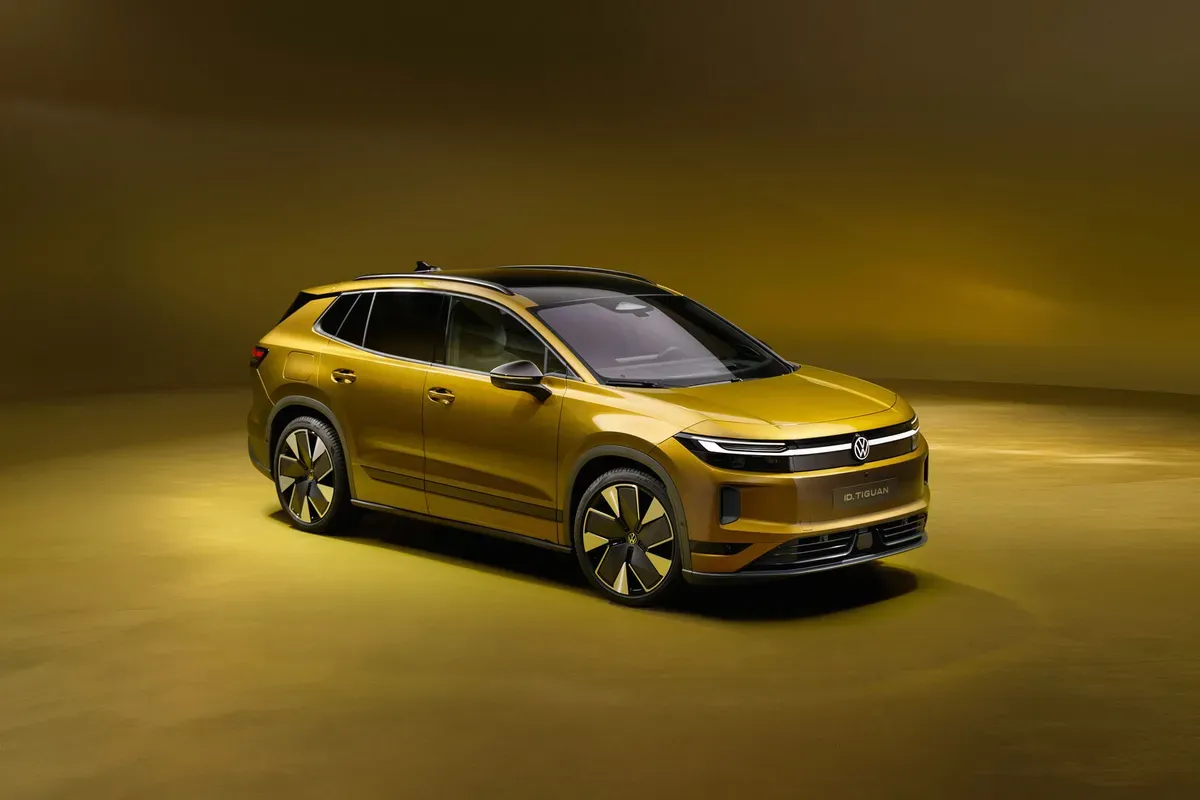
It is built in Emden, Germany, and comes in three versions:
- rear-wheel drive with 140 kW (190 PS) and a 58 kWh battery;
- rear-wheel drive with 210 kW (286 PS) and a 77 kWh battery;
- 4MOTION all-wheel drive with 220 kW (299 PS) and the 77 kWh battery.
WLTP range reaches up to 600 km, and the car can tow up to 2,000 kg. There is a 32-litre front boot and up to 534 litres at the back. Inside, a 12-inch passenger display is a first for a European Volkswagen. Pre-sales opened on 13 October in Germany and many other European countries, at prices from €42,695. The car launches at the beginning of 2027.
Škoda, also part of the Volkswagen Group, made the Kodiaq plug-in hybrid more powerful on 22 October. A 130 kW 1.5 TSI petrol engine and an 85 kW electric motor now give 200 kW, 50 kW more than before. The battery holds 25.7 kWh gross (19.7 kWh net) and charges at up to 50 kW on DC. A new range-topping Laurin & Klement trim adds massage seats and its own alloy wheels.
Renault Group: a family MPV concept, an Alpine icon and cheaper Dacias
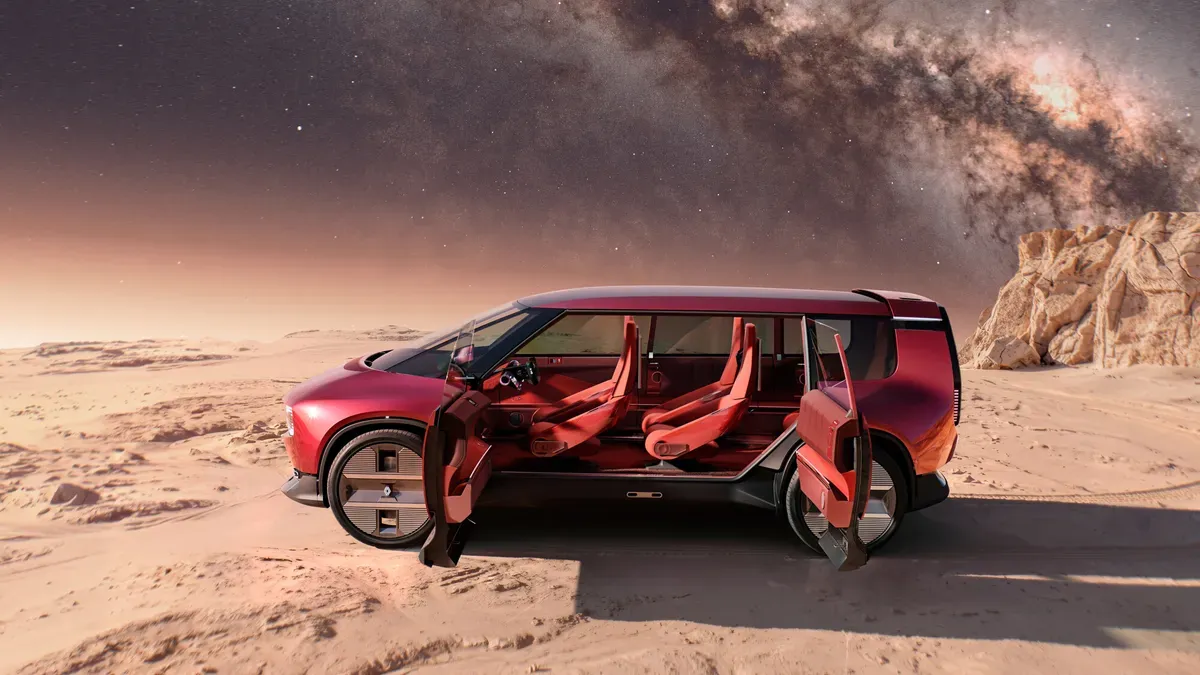
Renault unveiled the E-Space Concept on 12 October, an electric MPV that brings back the "voiture à vivre", the car you live in. It has six individual seats of the same size and design, in three rows on a completely flat floor. In its four-seat layout, the two middle seats fold into a table. Renault says the concept does not directly preview a production model and is not meant to replace the current Espace.
Alpine showed the A310 Vision, a one-off design study that marks 55 years of the four-cylinder A310 and 50 of the V6. Alpine says it is a creative exploration of its heritage, not the announcement of a production model.
Dacia brought two world premieres. The second-generation Spring, made in Europe, starts below €18,000. The Striker, a C-segment crossover offered with hybrid and LPG engines, starts below €25,000. Dacia also added a new Hybrid 155 powertrain to the Sandero, Sandero Stepway and Jogger, so every Dacia except the electric Spring now comes as a hybrid.
Hyundai, BYD and smart: new SUVs and a two-seater
Hyundai gave the all-new Bayon its world premiere on 12 October, with a 138 PS hybrid due to join the range in 2027. It also showed the European version of the all-new Tucson. The hybrid has 245 PS, and the plug-in hybrid 292 PS with an estimated electric range of up to 81 km. The boot holds 695 litres. Hyundai says it will have invested more than €3 billion in Europe by 2030, and in August it began building its first electric car, the IONIQ 3, at Izmit in Türkiye after a €250 million upgrade of the plant.
BYD revealed the Atto 8, a seven-seat electric SUV and its first European model with Flash Charging. On BYD's own chargers, its battery goes from 10% to 97% in nine minutes. Range is up to 653 km, and European sales start in the first quarter of 2027. BYD plans 3,000 Flash Charging stations across Europe by the end of 2027. It also gave the Shark plug-in hybrid pick-up its European debut, with sales in some markets within three months.
smart showed the production smart #2, an electric two-seat city car with an LFP battery and a target WLTP range of 290 km. Early ordering opens in Europe, and each market will announce its own line-up and prices.
Safety ratings and a battery recall
On 12 October Euro NCAP published new results with a new focus on physical controls. The Audi Q7, Kia EV2 and XPENG X9 each earned five stars. The Kia EV2's rating owes much to its driver state monitoring, which, as in the Audi, changes how it warns the driver depending on how alert they are. Audi brought back buttons and stalks in the new Q7 and scored 90% for its driving controls. Euro NCAP said the X9 relies too heavily on its touchscreen, but strong crash avoidance and post-crash scores still earned it five stars. The Mazda 2 Hybrid kept a four-star rating carried over from its Toyota Yaris sister car.
Volkswagen is recalling 72,668 electric cars worldwide, 9,881 of them in Germany, according to records of Germany's motor transport authority (KBA). It covers certain ID.3, ID.4, ID.7 and ID. Buzz cars built between 2022 and 2025 and Cupra Born cars built between 2022 and 2024. Some battery cells from a supplier do not meet specification, and charging above 80% can cause them to overheat. Until a fix is ready, owners are asked to charge only to 80%, and where possible Volkswagen limits charging to 80% remotely.
A cap on Chinese hybrids, a Spanish Leapmotor and the UK Budget
The European Commission confirmed on 12 October that it will limit hybrid cars imported from China to 350,000 a year. Cars above the quota will stay in customs rather than pay a tariff. The quota comes into force in December as part of a four-year agreement with Beijing, and the EU expects it to halve China's 6% share of the market. Chinese brands' cars built inside the EU are not covered.
One of them is already in production. On 16 October Stellantis and Leapmotor started building the B10 at Zaragoza in Spain, where the electric SUV joins the Opel Corsa, Peugeot 208 and Lancia Ypsilon on the line.
In the UK, the Budget on 28 October froze fuel duty: the 5p-per-litre cut, due to end on 31 December, now lasts until July 2027, holding duty at 52.95p a litre. The VAT relief on household electricity was also extended to July 2027, while public chargers still carry 20% VAT. From spring 2027 the government will spend £100 million over two years to lower prices at slower public chargers near people's homes, saving regular users about £150 a year. A taskforce will look at letting drivers use their home energy tariff at some public chargers.
Registrations: electric cars keep gaining ground
The latest Europe-wide figures, published by ACEA on 22 October, cover September. From January to September, 8,517,059 new cars were registered in the EU, up 5.7%.
Battery-electric cars took 22.7% of the market, against 16.1% a year earlier, and hybrids remained the most popular choice at 36.3%. Plug-in hybrids rose to 10.1% from 9.0%. Petrol fell to 21.2% and diesel to 7.1%, so together they took 28.2%, against 36.9% a year earlier.
In September alone, registrations rose 9.3% to 971,048. Battery-electric registrations rose 72.9% to 290,117, while petrol fell 23.4% to 168,564.